Winding up the horse: What it means and what the benefits are
Por Horse TV
25.06.2026
NEWS | Lifestyle
Groundwork is a fundamental part of equestrian training and, of all the exercises that can be carried out from the ground, lunging the horse is one of the most commonly used.
There is a misconception that it is used to tire the animal out before riding it, but this is far from the truth. This practice helps to improve the horse’s physical condition, strengthen communication with the rider and assess the quality of its movements. In addition to its physical benefits, lunging also contributes to the horse’s mental balance, promoting concentration and relaxation.
What does lunging a horse involve?
Lunging involves working the horse from the ground using a long lead rope, guiding it around the rider in a wide circle (or around the arena if the rider moves with the horse). Through voice commands, body position and a whip used as an extension of the arm to reinforce the driving aids, it is possible to control the rhythm, the transitions between gaits and the horse’s attitude during the session.
It is a common tool in foal training, in the physical preparation of sport horses and as a complement to rehabilitation programmes or programmes to return to work after a period of rest.
What is the purpose of lunging a horse?
The applications of lunging are very varied and can be adapted to horses of different ages, training levels and sporting objectives.
Training young horses
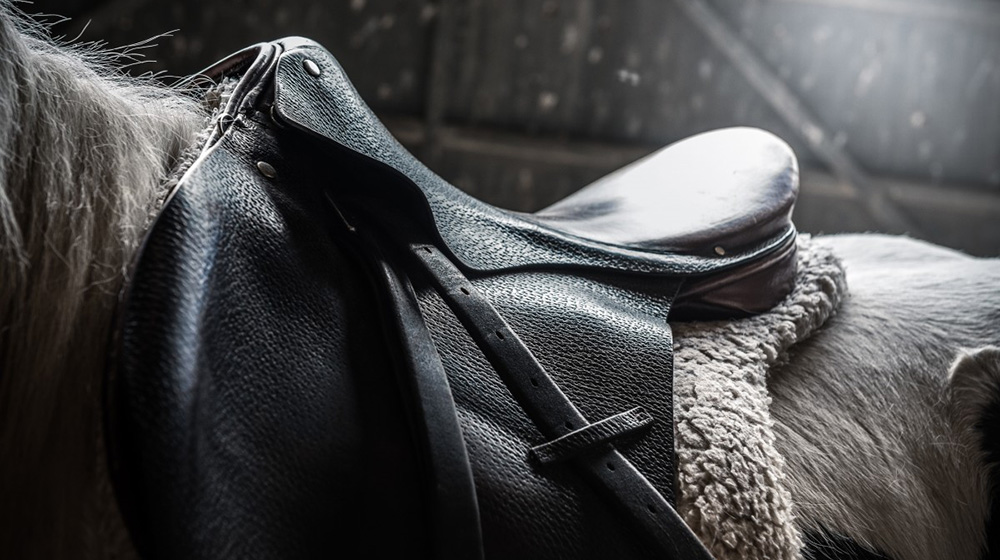
For foals, lunging is usually part of the early stages of training. Before accepting the rider’s weight, the horse learns to respond to verbal commands, maintain a steady pace and become familiar with various pieces of equipment, such as the girth or the saddle.
Improving balance and musculature
By moving without the rider’s weight, the horse can work more naturally on its own balance. Well-planned sessions help to strengthen the muscles of the back, hindquarters and hind legs, as well as improving coordination and suppleness.
Warm-up before mounted work
Many riders use the lead rope as a preparation tool before mounting, particularly with spirited horses or those that have been in their stalls for several hours. A few minutes of controlled work can help the horse to focus and begin the mounted session in better physical and mental condition.
Observing movement
Working from the ground allows for a detailed analysis of the regularity of the gaits, the length of the strides and any possible stiffness. For this reason, the lunge line is also a useful tool during rehabilitation or veterinary monitoring, always under professional supervision.
Retraining and improving fitness
The lunge line encourages the horse to learn clear responses to voice cues and helps to establish well-organised working habits. In certain cases, it can be used to rehabilitate horses that have lost their fitness or that have difficulty concentrating during ridden work.
How to lead a horse correctly?
To lead a horse safely, it is advisable to use a lead rope between 8 and 10 metres long, a lead halter, a long whip used as an extension of the arm to reinforce the driving aids, leg protectors and gloves to prevent friction burns. In some exercises, auxiliary reins may also be used, although they must always be fitted correctly and used judiciously so as not to interfere with the horse’s natural movement.
The key to a good session lies in maintaining a wide circle, keeping a light and constant contact with the lead rope, and communicating with the horse through clear verbal aids and body language. It is also advisable to alternate work on both sides, make frequent transitions between walk, trot and canter, and adapt the duration of the exercise to the horse’s age, physical condition and level of training, avoiding excessively long sessions, especially with young horses.
Among the most common mistakes are working for too long in small circles, overusing auxiliary aids or using the whip as a means of punishment – practices that can be counterproductive both for the horse’s learning and its welfare.
Much more than just a warm-up exercise
When done correctly, lunging a horse is a very valuable training tool. It helps to develop muscle, improve obedience and strengthen the bond between horse and rider, making it an ideal complement to any discipline and an effective way of promoting the animal’s physical and mental wellbeing.









_v2.svg)
_v2.svg)









_v2.svg)